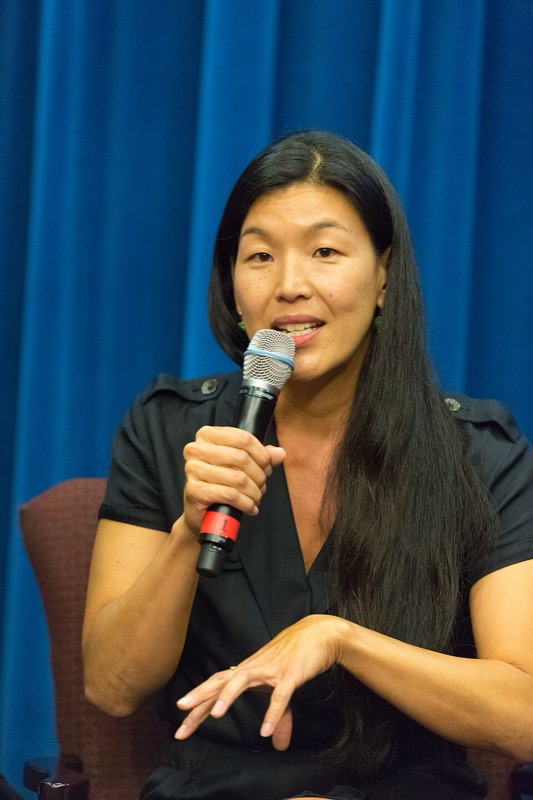
- Company
- National Domestic Workers Alliance
- Role
- President
- Est. Net Worth
- $2 Million (Est.)
- Stage
- Emerging
- Industry
- Healthcare
Ai-jen Poo
President at National Domestic Workers Alliance
About
Ai-jen Poo co-founded the National Domestic Workers Alliance in 2007, organizing millions of nannies, housekeepers, and caregivers — one of the most excluded workforces in America — into a powerful national movement. Under her leadership, NDWA passed Domestic Workers' Bills of Rights in multiple states and launched Alia, a portable benefits platform giving domestic workers access to paid time off and insurance. A MacArthur Fellow and TIME 100 honoree, Poo has become the leading voice in the fight for care infrastructure — arguing that how a society treats its caregivers is a measure of its values and a critical public health issue.
Current Company
National Domestic Workers Alliance — President
Organizing the Invisible Workforce
Ai-jen Poo spent a decade organizing domestic workers in New York City before co-founding the National Domestic Workers Alliance in 2007. The challenge was unprecedented: domestic workers — nannies, housekeepers, home care aides — had been deliberately excluded from labor protections since the New Deal, when Southern legislators ensured that professions dominated by Black women were carved out of the Fair Labor Standards Act. These workers had no collective bargaining rights, no overtime protections, and no workplace safety standards.
Under Poo's leadership, NDWA organized a decentralized workforce that traditional unions couldn't reach — people who worked alone in private homes, often undocumented, with no common employer. The alliance passed Domestic Workers' Bills of Rights in New York, California, Hawaii, and other states, establishing basic protections that had been denied for 80 years.
The Care Economy as National Infrastructure
Poo has become the leading voice for a radical reframing: that care work — childcare, elder care, disability care — is not a personal problem but a public infrastructure need, as fundamental as roads and broadband. She argues that as America ages, the demand for home care workers will explode, and the question is whether the country will build a care system that treats these workers with dignity or continue to rely on an underpaid, undervalued workforce that burns out and turns over.
Through NDWA, Poo launched Alia, a portable benefits platform that allows domestic workers to accumulate paid time off and insurance contributions across multiple employers — solving a structural problem that no single employer could address alone. A MacArthur Fellow and TIME 100 honoree, Poo has moved the care economy from the margins of public policy to the center, making the case that how a society values its caregivers is ultimately a measure of its humanity.