- Company
- Chez Panisse
- Role
- Founder & Owner
- Est. Net Worth
- $5 Million (Est.)
- Stage
- Emerging
- Industry
- Hospitality
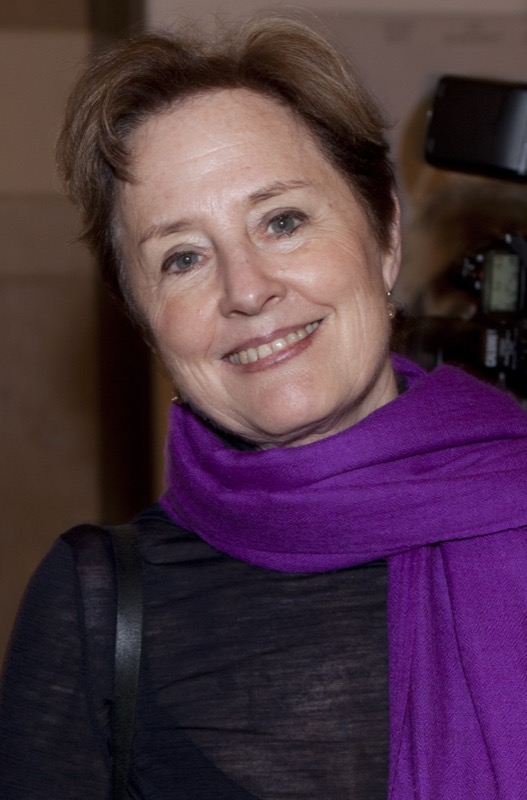
Alice Waters
Founder & Owner at Chez Panisse
About
Alice Waters opened Chez Panisse in Berkeley, California, in 1971 and in doing so launched the farm-to-table movement that would transform American cuisine. Her insistence on using only the freshest, locally sourced, seasonal ingredients was radical at a time when most American restaurants relied on frozen and processed foods. Through Chez Panisse, her cookbooks, and her Edible Schoolyard Project — which integrates organic gardens and cooking classes into public school curricula — Waters has influenced how America grows, cooks, and thinks about food more profoundly than perhaps any other single individual. She was awarded the National Humanities Medal and has been called the mother of American food culture.
Current Company
Chez Panisse — Founder & Owner
The Restaurant That Launched a Revolution
When Alice Waters opened Chez Panisse in Berkeley, California, in 1971, she wasn't trying to start a movement. She was a 27-year-old French cultural studies graduate who had fallen in love with the fresh, seasonal cooking she experienced during a year studying in France and wanted to recreate that experience for her friends. But the restaurant she built — a single-menu establishment that served only what was fresh, local, and in season — became the birthplace of California cuisine and the farm-to-table movement that would eventually transform American food culture from coast to coast.
Chez Panisse's early years were chaotic. Waters had no formal culinary training and learned to cook by intuition and by studying Elizabeth David's Mediterranean cookbooks. The restaurant nearly went bankrupt multiple times. But the food was extraordinary — not because of technique, but because of ingredients. Waters forged direct relationships with local farmers, ranchers, and foragers, paying premium prices for organic produce at a time when the word 'organic' had barely entered the American vocabulary. She proved that the quality of ingredients matters more than the skill of the cook — a principle that sounds obvious now but was revolutionary in an era when American restaurants routinely relied on frozen, canned, and processed foods.
From Restaurant to Reform Movement
Waters's most lasting legacy may not be Chez Panisse but the Edible Schoolyard Project, which she founded in 1995 at Martin Luther King Jr. Middle School in Berkeley. The program integrates a one-acre organic garden and a teaching kitchen into the school curriculum, connecting academic subjects to the experience of growing, cooking, and sharing food. Students learn fractions by measuring ingredients, biology by composting, and environmental science by maintaining the garden. The model has been replicated in over 6,000 schools worldwide and became the template for a generation of school garden and cooking programs.
Waters has been called the mother of American food culture, and the title is not hyperbolic. Her influence extends from the menus of high-end restaurants that now take local sourcing for granted, to the farmers' markets that have multiplied from a handful to over 8,000 nationwide, to the school lunch reform movement that has made fresh, locally grown food available to millions of children. She has been awarded the National Humanities Medal, the James Beard Lifetime Achievement Award, and the French Legion of Honor. But her most important contribution may be the simplest: she convinced America that growing and cooking food with care is not a luxury but a necessity — a daily act with consequences for health, community, and the planet.