- Company
- Equal Justice Initiative
- Role
- Founder & Executive Director
- Est. Net Worth
- $3 Million (Est.)
- Stage
- Emerging
- Industry
- Healthcare
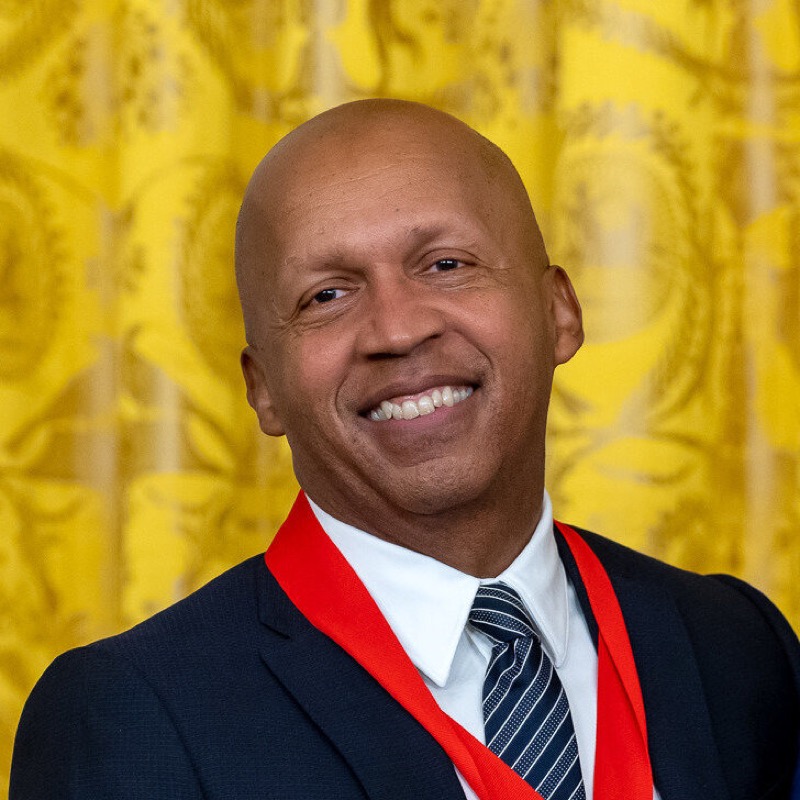
Bryan Stevenson
Founder & Executive Director at Equal Justice Initiative
About
Bryan Stevenson founded the Equal Justice Initiative in 1989, building one of the most influential legal advocacy organizations in American history. EJI has won landmark Supreme Court cases, exonerated over 140 wrongly condemned prisoners on death row, and challenged racial bias in the criminal justice system. Stevenson also created the National Memorial for Peace and Justice in Montgomery, Alabama — the first memorial dedicated to victims of lynching in the United States. His bestselling memoir 'Just Mercy' was adapted into a major film, and his work on the intersection of incarceration, trauma, and public health has reshaped how policymakers think about justice as a health equity issue.
Current Company
Equal Justice Initiative — Founder & Executive Director
Defending the Condemned
Bryan Stevenson founded the Equal Justice Initiative in 1989 in Montgomery, Alabama, with a mission that most lawyers would consider impossible: providing legal representation to people on death row who had been abandoned by the system. Over three decades, EJI has won reversals, relief, or release for over 140 wrongly condemned prisoners, challenged racial discrimination in jury selection, and argued landmark cases before the U.S. Supreme Court — including rulings that banned mandatory life-without-parole sentences for children.
Stevenson's bestselling memoir 'Just Mercy' told the story of Walter McMillian, a Black man in Alabama wrongly convicted of murder and sentenced to death. The book became a major Warner Bros. film and introduced millions of people to the reality of a criminal justice system shaped by racial bias, poverty, and institutional indifference. It remains one of the most assigned books at American law schools.
Memory, Trauma, and Public Health
In 2018, Stevenson opened the National Memorial for Peace and Justice in Montgomery — the first memorial in the United States dedicated to victims of lynching. The memorial, along with the companion Legacy Museum, confronts the relationship between slavery, lynching, segregation, and mass incarceration, arguing that America's criminal justice crisis cannot be understood without reckoning with its racial history.
Stevenson's work increasingly frames criminal justice as a public health issue. Mass incarceration, he argues, is both a cause and consequence of trauma — damaging not just individuals but entire communities through broken families, lost economic productivity, and intergenerational psychological harm. EJI's research on the health impacts of incarceration has influenced how public health researchers, policymakers, and medical institutions think about the intersection of justice and well-being.