- Company
- Icahn Enterprises
- Role
- Founder & Chairman
- Est. Net Worth
- $6 Billion
- Stage
- Elite
- Industry
- Finance
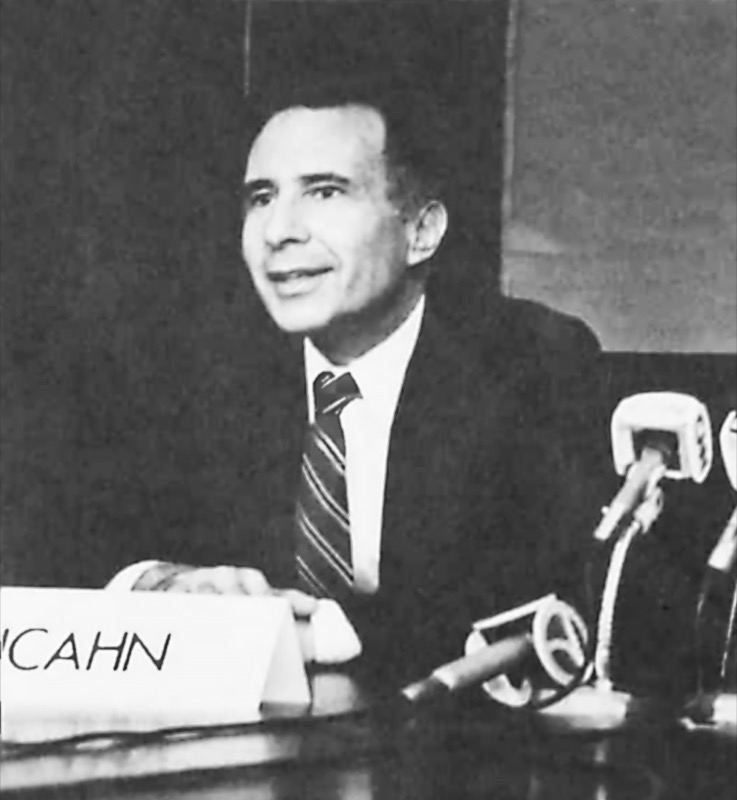
Carl Icahn
Founder & Chairman at Icahn Enterprises
About
Carl Icahn became the most feared corporate raider in American business history, pioneering the activist investing strategy of acquiring large stakes in underperforming companies and pressuring management to make changes that increase shareholder value. Starting with his hostile takeover of TWA in 1985, Icahn waged battles against some of the largest corporations in America — including RJR Nabisco, Texaco, Phillips Petroleum, and more recently Apple, eBay, and Xerox — earning billions for himself and his investors while forcing corporate boards to confront their own inefficiencies. His investment firm, Icahn Enterprises, manages a diversified portfolio across energy, automotive, food packaging, real estate, and pharmaceuticals, making him one of the most influential figures in the history of American capitalism.
Current Company
Icahn Enterprises — Founder & Chairman
The Original Corporate Raider
Carl Icahn didn't invent hostile takeovers, but he perfected them as an art form and a philosophy. Starting in the 1970s as a small-time options trader, he discovered that buying large stakes in underperforming companies and demanding changes — board seats, management shake-ups, asset sales, share buybacks — could generate extraordinary returns. His 1985 hostile takeover of TWA made him a household name and established the template for what would become activist investing: identify a company whose stock price doesn't reflect the underlying value of its assets, acquire enough shares to force management's hand, and then push for changes that close the gap.
Icahn's method was unapologetically confrontational. He didn't send polite letters to boards; he launched proxy fights, threatened lawsuits, and publicly humiliated executives he considered incompetent. His targets over five decades have included some of the largest corporations in America: Texaco, Phillips Petroleum, Marvel Entertainment, Time Warner, Apple, eBay, and Xerox. Not every battle ended in a takeover — often the mere threat of Icahn's involvement was enough to force changes. The 'Icahn Lift' became a recognized market phenomenon: a company's stock price would jump simply on news that he had acquired a position, because investors knew that changes were coming.
The Enduring Philosophy of Shareholder Activism
Icahn's career raises a fundamental question about American capitalism: who should a corporation serve? His answer — shareholders, unequivocally and above all other stakeholders — made him the philosophical godfather of an entire generation of activist investors who followed his model. Icahn argues that entrenched management teams, protected by staggered boards and poison pills, consistently destroy shareholder value by prioritizing their own job security over operational efficiency. His campaigns have forced companies to return billions to shareholders through buybacks and dividends, spin off underperforming divisions, and replace executives who had presided over years of decline.
Critics counter that Icahn's short-term focus on stock price maximization has gutted companies, eliminated jobs, and sacrificed long-term investment for quarterly returns. The TWA takeover is often cited as an example: Icahn stripped the airline of its assets, loaded it with debt, and ultimately presided over its decline. But even Icahn's detractors acknowledge that his campaigns have exposed genuine governance failures and forced boards to be accountable to the people who own the company. At nearly ninety, Icahn remains active, still accumulating positions and writing public letters to boards — still animated by the conviction that most corporate boards need someone watching over their shoulders.