- Company
- Lawrence J. Ellison Institute for Transformative Medicine
- Role
- Professor & Founder
- Est. Net Worth
- $5 Million (Est.)
- Stage
- Emerging
- Industry
- Healthcare
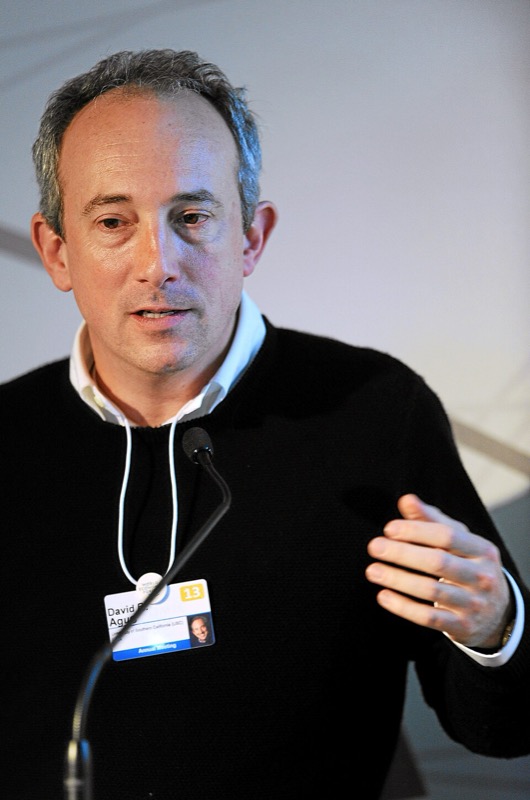
David Agus
Professor & Founder at Lawrence J. Ellison Institute for Transformative Medicine
About
David Agus is a physician-scientist and professor of medicine at USC who has become one of America's most prominent advocates for preventive and personalized medicine. He founded the Lawrence J. Ellison Institute for Transformative Medicine, funded by Oracle co-founder Larry Ellison, which applies technology, data science, and AI to cancer research and prevention. His bestselling books — 'The End of Illness,' 'A Short Guide to a Long Life,' and 'The Lucky Years' — challenged conventional medical thinking by arguing that the key to health is understanding your individual biology rather than following one-size-fits-all guidelines. Agus served as a personal physician to Steve Jobs and has advised multiple heads of state on health policy.
Current Company
Lawrence J. Ellison Institute for Transformative Medicine — Professor & Founder
Redefining Medicine as Preventive Engineering
David Agus has built his career on a provocative thesis: that modern medicine's focus on treating disease after it appears is fundamentally backwards, and that the future of healthcare lies in understanding each person's biological system well enough to prevent disease before it starts. His first bestselling book, 'The End of Illness,' argued that we should stop thinking about diseases as discrete entities to be conquered and instead focus on maintaining the body's overall system health — an approach more analogous to engineering than traditional medicine.
This philosophy found its institutional expression in the Lawrence J. Ellison Institute for Transformative Medicine at USC, which Agus founded with funding from Oracle co-founder Larry Ellison. The Institute applies data science, artificial intelligence, and proteomics — the study of an individual's complete set of proteins — to develop personalized approaches to cancer prevention and treatment. Agus's argument is that the same computational tools that allow tech companies to predict consumer behavior can be applied to biological systems to identify disease risk before symptoms appear.
The Public Intellectual of Personalized Health
Agus's bestselling books and his frequent media appearances have made him one of the most visible advocates for personalized medicine in America. His advice — which includes wearing comfortable shoes, getting regular sleep, taking a daily baby aspirin, and avoiding supplements — is deliberately unglamorous, grounded in the principle that simple, consistent behaviors matter more than dramatic interventions. This approach has drawn criticism from physicians who argue that his recommendations oversimplify complex medical evidence and from supplement industry advocates who dispute his skepticism of vitamins.
His role as Steve Jobs's personal physician during the Apple co-founder's battle with pancreatic cancer gave Agus a unique perspective on the intersection of technology and medicine. While he has been circumspect about that relationship, the experience reinforced his conviction that even the most brilliant people make medical decisions based on hope rather than evidence, and that the medical profession has a responsibility to communicate honestly about what science does and doesn't know. Agus's broader influence lies in his insistence that health is not a matter of luck or genetics but a system that can be understood, maintained, and optimized — an engineering problem as much as a medical one.