- Company
- Salk Institute for Biological Studies
- Role
- Nobel Laureate & Former President
- Est. Net Worth
- $3 Million (Est.)
- Stage
- Emerging
- Industry
- Healthcare
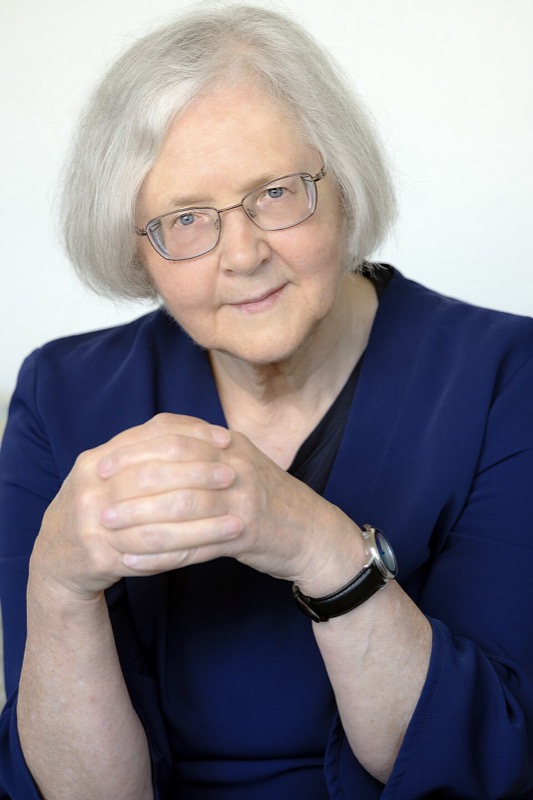
Elizabeth Blackburn
Nobel Laureate & Former President at Salk Institute for Biological Studies
About
Elizabeth Blackburn won the 2009 Nobel Prize in Physiology or Medicine for her discovery of telomerase, the enzyme that replenishes telomeres — the protective caps at the ends of chromosomes that control cellular aging. Her research fundamentally changed how science understands aging, cancer, and cellular health. Born in Tasmania, Australia, she conducted her groundbreaking work at UC San Francisco and later served as president of the Salk Institute for Biological Studies. Her bestselling book 'The Telomere Effect,' co-authored with health psychologist Elissa Epel, translated decades of molecular biology research into practical advice about how lifestyle choices affect cellular aging — bridging the gap between laboratory science and public health.
Current Company
Salk Institute for Biological Studies — Nobel Laureate & Former President
Decoding the Clock of Cellular Aging
Elizabeth Blackburn's discovery of telomerase — the enzyme that replenishes the telomeres capping the ends of chromosomes — fundamentally changed how biology understands cellular aging and earned her the 2009 Nobel Prize in Physiology or Medicine. Working at UC San Francisco in the 1980s alongside her graduate student Carol Greider, Blackburn identified the mechanism by which cells protect their chromosomes during division. Each time a cell divides, its telomeres shorten slightly; when they become too short, the cell stops dividing and eventually dies. Telomerase counteracts this process, rebuilding telomeres and extending cellular lifespan.
The implications of this discovery rippled through multiple fields of medicine. Cancer cells, it turned out, activate telomerase to achieve the unlimited cell division that makes tumors lethal — making telomerase both a potential target for cancer therapy and a key to understanding why some cells become immortal while others age and die. Blackburn's research connected molecular biology to the lived experience of aging in a way that few discoveries have, providing a biological mechanism for what had previously been an abstract observation: that cells, like organisms, have finite lifespans that can be measured and potentially modified.
From the Lab Bench to the Public Square
Blackburn's career took an unusual turn in 2004 when she was dismissed from President Bush's Council on Bioethics after publicly opposing the council's stance on embryonic stem cell research. The episode highlighted her willingness to defend scientific evidence in political contexts — a quality that made her controversial among those who preferred scientists to stay in their laboratories but that earned her enormous respect among colleagues who saw academic freedom under threat.
Her bestselling book 'The Telomere Effect,' co-authored with health psychologist Elissa Epel, represented a different kind of boundary-crossing — translating decades of molecular biology into practical advice for non-scientists. The book presented evidence that stress, poor sleep, lack of exercise, and unhealthy diet accelerate telomere shortening, while meditation, social connection, and specific lifestyle changes can slow or even reverse the process. Critics argued that the book oversimplified complex biology, but Blackburn defended it as a necessary bridge between laboratory research and public health — arguing that if telomere science could motivate people to change behaviors that independently improved health, the precise mechanism mattered less than the outcome.