- Company
- Soros Fund Management
- Role
- Founder & Chairman
- Est. Net Worth
- $7 Billion
- Stage
- Elite
- Industry
- Finance
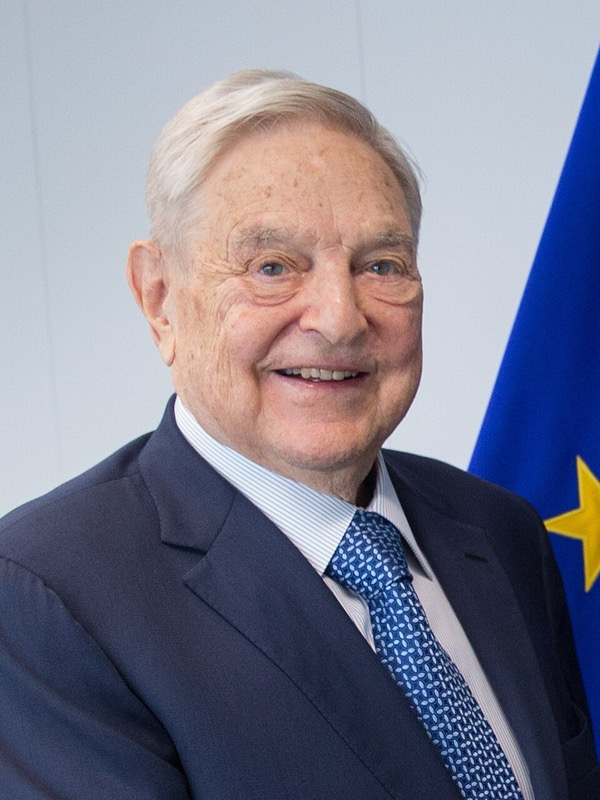
George Soros
Founder & Chairman at Soros Fund Management
About
George Soros founded Soros Fund Management in 1969 and built it into one of the most successful hedge funds in history, generating average annual returns of roughly 30% over three decades. He became globally famous in 1992 when his Quantum Fund shorted the British pound, earning over $1 billion in a single day and forcing the UK out of the European Exchange Rate Mechanism — a trade that earned him the title 'the man who broke the Bank of England.' Beyond finance, Soros has donated over $32 billion through the Open Society Foundations, making him one of the largest philanthropists in history, funding democracy movements, education, and human rights across more than 120 countries.
Current Company
Soros Fund Management — Founder & Chairman
The Man Who Broke the Bank of England
On September 16, 1992 — a day that became known as Black Wednesday — George Soros's Quantum Fund shorted the British pound with a position reportedly exceeding $10 billion, forcing the UK government to withdraw from the European Exchange Rate Mechanism and earning Soros over $1 billion in a single day. The trade remains the most famous currency speculation in financial history, but it was built on Soros's distinctive philosophical framework: his theory of reflexivity, which holds that market participants' perceptions actively shape the fundamentals they're supposed to passively reflect.
Soros had been developing this framework since his days studying under philosopher Karl Popper at the London School of Economics in the 1950s. Where most hedge fund managers relied on quantitative models or fundamental analysis, Soros traded on the insight that financial markets are inherently unstable because the beliefs of participants create feedback loops that amplify trends beyond what fundamentals would justify. This philosophical approach to trading — seeing markets as a conversation between perception and reality rather than an efficient pricing mechanism — allowed him to identify and exploit the kind of structural mispricing that produced Black Wednesday.
Philanthropy as a Second Career
Soros's philanthropic career through the Open Society Foundations has been as consequential as his financial one. He has donated over $32 billion to causes spanning democracy promotion, education, public health, and human rights across more than 120 countries — making his foundation network one of the largest private philanthropic operations in the world. His giving began in the 1970s with scholarships for Black South Africans under apartheid and expanded dramatically after the fall of the Berlin Wall, when he funded universities, media organizations, and civil society groups across Eastern Europe.
The Open Society Foundations' model differs from most large-scale philanthropy in its willingness to fund politically controversial causes. Soros has backed criminal justice reform, drug policy reform, immigration advocacy, and press freedom in countries where those positions carry genuine risk. This approach has made him one of the most praised and most attacked philanthropists alive — celebrated by civil liberties organizations and demonized by authoritarian governments and conspiracy theorists who have made his name shorthand for everything they oppose about liberal democracy.