- Company
- Top Chef / Arlo Grey
- Role
- Chef & Television Host
- Est. Net Worth
- $5 Million (Est.)
- Stage
- Emerging
- Industry
- Hospitality
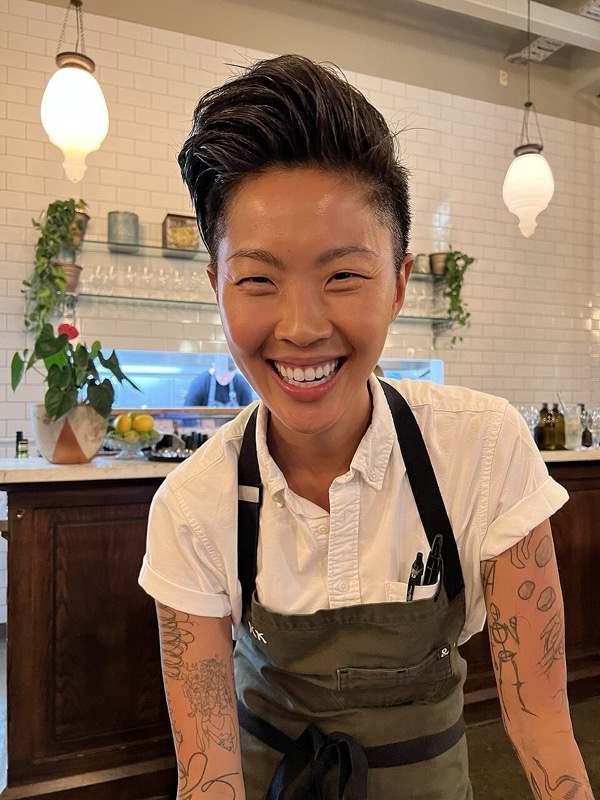
Kristen Kish
Chef & Television Host at Top Chef / Arlo Grey
About
Kristen Kish made history as the winner of Top Chef Season 10 and has since become the show's host — the first Asian American and first openly LGBTQ+ person to lead the iconic cooking competition franchise. Born in Seoul, South Korea, and adopted by an American family, Kish trained at Le Cordon Bleu and worked in some of Boston's best kitchens before her Top Chef win catapulted her into national prominence. Her restaurant Arlo Grey at the LINE Hotel in Austin, Texas, showcases a refined, ingredient-driven cuisine that reflects both her classical training and her personal story. Kish has used her platform to advocate for representation in the restaurant industry, speaking openly about her experiences as an adopted person, as a queer woman in professional kitchens, and as an Asian American navigating an industry that has historically centered white male perspectives. Her appointment as Top Chef's host in 2023 represented a generational shift in food media — a recognition that the face of American cooking is far more diverse than television had previously acknowledged.
Current Company
Top Chef / Arlo Grey — Chef & Television Host
From Top Chef Winner to the Face of American Cooking
Kristen Kish's appointment as host of Top Chef in 2023 — replacing the iconic Padma Lakshmi — represented both a personal triumph and a cultural milestone: Kish became the first Korean American and first openly LGBTQ+ person to host one of the most influential food shows on television. Her selection was not a diversity casting decision but a recognition of her culinary credentials: Kish won Top Chef Season 10 with a performance that judges described as one of the most technically accomplished in the show's history, demonstrating a mastery of classical technique and a creative sensibility that set her apart in a competition known for attracting the best young chefs in America.
Her personal story adds emotional depth to her public profile. Born in Seoul, South Korea, and adopted by an American family in Michigan, Kish has spoken movingly about the identity questions that adoption raises — questions about belonging, heritage, and the meaning of home that she has explored through food as much as through words. Her cooking at Arlo Grey in Austin reflects this complexity: dishes that draw from French classical technique, Korean flavors, and Southern ingredients in combinations that feel personal rather than programmatic. Kish's restaurant is not a fusion concept in the conventional sense but a reflection of a chef whose identity encompasses multiple culinary traditions and who refuses to choose between them.
Representation, Resilience, and Leading by Example
Kish has used her platform to advocate for representation in the culinary industry — not through speeches or manifestos but through the simple, powerful act of being visibly excellent at the highest level of her profession. As an Asian American woman in an industry that has historically been dominated by white male voices, and as an openly queer chef in a profession that has only recently begun to reckon with its heteronormativity, Kish's presence on the biggest stage in food television sends a message that doesn't need to be articulated to be understood: this is what a great chef looks like, and it looks like a lot of things.
Her approach to mentoring young chefs reflects the same philosophy: Kish advocates for creating kitchen cultures that are rigorous without being abusive, that maintain the highest standards of technical excellence while treating the people who work in them with dignity and respect. She has been candid about her own struggles — with the pressure of competition, with the demands of restaurant life, and with the personal challenges of navigating an industry that was not designed with people like her in mind — and this honesty has made her a role model not just for aspiring chefs but for anyone building a career in a field where they don't see themselves represented. Kish demonstrates that representation matters not because it makes people feel good but because it expands the collective imagination about who can lead and what leadership looks like.