- Company
- Bridgewater Associates
- Role
- Founder
- Est. Net Worth
- $15 Billion
- Stage
- Elite
- Industry
- Finance
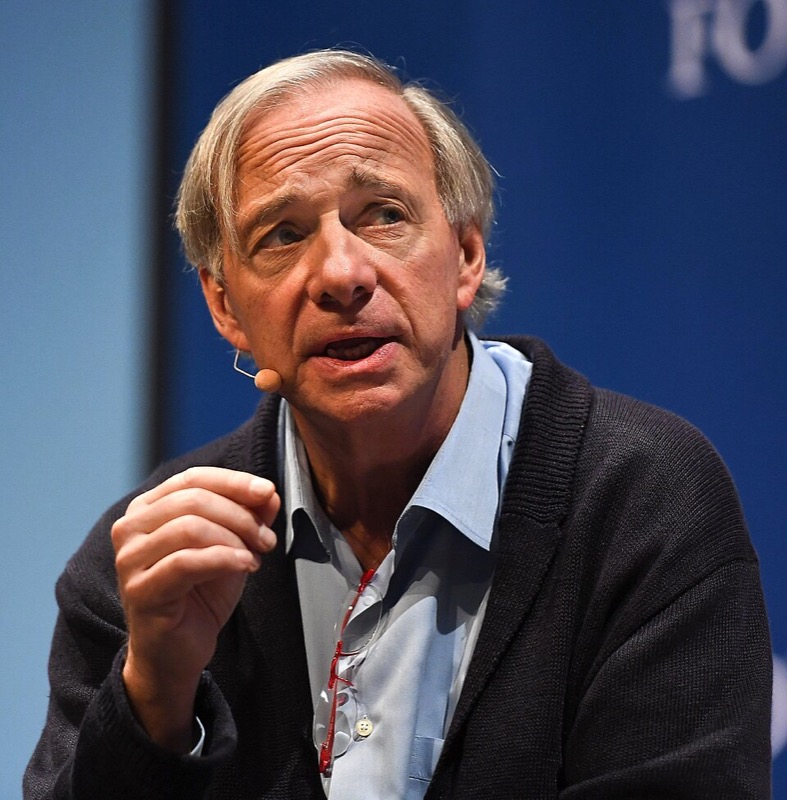
Ray Dalio
Founder at Bridgewater Associates
About
Ray Dalio founded Bridgewater Associates in 1975 from his two-bedroom apartment, growing it into the world's largest hedge fund with over $150 billion in assets under management. Bridgewater's Pure Alpha fund became one of the most successful investment vehicles in history, and Dalio's macroeconomic research — particularly on debt cycles and economic machines — influenced central bankers, policymakers, and institutional investors worldwide. His book 'Principles' codified his management philosophy of radical transparency and idea meritocracy.
Current Company
Bridgewater Associates — Founder
The Principles Machine
Ray Dalio started Bridgewater Associates in 1975 from his two-bedroom apartment, trading commodity futures and publishing a daily research newsletter called 'Daily Observations' that became required reading for central bankers, treasury secretaries, and institutional investors worldwide. Bridgewater's Pure Alpha fund became one of the most successful hedge funds in history, generating over $50 billion in net gains for investors through a systematic, macroeconomic approach to global markets.
Dalio's management philosophy was as distinctive as his investment approach. He built Bridgewater around 'radical transparency' — recording every meeting, encouraging subordinates to challenge superiors, and rating every employee's believability on every topic. The culture was polarizing: some called it the most intellectually honest organization on earth, others compared it to a cult. But the results spoke: Bridgewater managed over $150 billion at its peak, more than any other hedge fund.
From Hedge Fund to Public Intellectual
After stepping back from day-to-day management, Dalio published 'Principles' — a book codifying the decision-making frameworks he developed over four decades. It became a global bestseller and spawned a series of animated videos explaining economic concepts that have been viewed hundreds of millions of times. His follow-up work on debt crises, the rise and fall of empires, and the changing world order positioned Dalio as one of the most influential economic thinkers outside academia.
Dalio's transition from secretive hedge fund manager to public intellectual reflected a broader thesis: that the principles governing markets, organizations, and civilizations are discoverable and systematic. Whether one agrees with his conclusions or not, Dalio's body of work — the investment returns, the management system, the published research — represents one of the most complete attempts by a practitioner to codify how the economic world actually works.