- Company
- Baidu
- Role
- Co-Founder, Chairman & CEO
- Est. Net Worth
- $15 Billion
- Stage
- Elite
- Industry
- Tech & SaaS
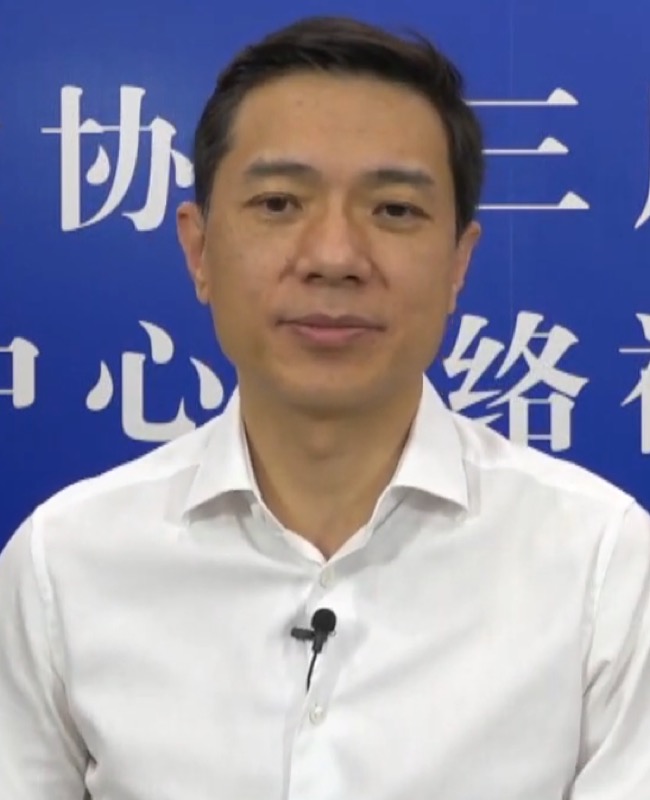
Robin Li
Co-Founder, Chairman & CEO at Baidu
About
Robin Li co-founded Baidu in 2000 and built it into China's dominant search engine — a platform that processes billions of queries daily and commands roughly 70 percent of the Chinese search market. Li's key technical contribution was the development of Rankdex, a search engine ranking algorithm that used hyperlink analysis to determine page relevance — an approach similar to Google's PageRank, which Li actually patented before Google was founded. Under his leadership, Baidu expanded from search into artificial intelligence, autonomous driving, cloud computing, and smart devices, and has positioned itself as China's leading AI company. Baidu's Apollo autonomous driving platform is the most advanced self-driving technology in China, operating robotaxi services in multiple cities. Li's pivot toward AI — declaring that Baidu would become an AI-first company — has been validated by the rapid growth of Baidu's AI cloud services and its ERNIE large language model, which competes with GPT-4 in the Chinese market.
Current Company
Baidu — Co-Founder, Chairman & CEO
Building China's Search Engine and the Patent Before Google
Robin Li's claim to a place in the history of internet search rests on a technical contribution that predates Google's founding: the development of Rankdex, a search engine algorithm that used hyperlink analysis to rank web pages by relevance. Li filed a patent for this technology in 1996, two years before Larry Page and Sergey Brin published their PageRank paper at Stanford. While the academic credit for link-analysis ranking is often attributed solely to Google's founders, Li's independent development of a similar approach — and his practical application of it through Baidu — demonstrates that the insight was, as is often the case with transformative technologies, arriving simultaneously from multiple directions.
Baidu's dominance of the Chinese search market — commanding roughly 70 percent of queries in a country with over a billion internet users — has made it one of the most valuable technology companies in the world and has given Li an outsized influence over how information flows in the world's most populous country. The company's evolution from a search engine into a comprehensive technology platform — offering cloud computing, mapping, streaming media, and financial services — mirrors the trajectory of Western tech giants, though the regulatory and competitive environment in which Baidu operates is fundamentally different from Silicon Valley.
The AI Pivot and Baidu's Autonomous Future
Li's most consequential strategic decision has been Baidu's pivot toward artificial intelligence, which he declared the company's top priority beginning in 2017. This was not a cosmetic rebranding but a genuine reorientation of the company's research budget, talent acquisition, and product development around AI technologies. Baidu's Apollo autonomous driving platform has become the most advanced self-driving technology developed in China, operating commercial robotaxi services in multiple cities including Beijing and Wuhan. The company's ERNIE large language model competes with the best Western AI models and has been integrated into Baidu's search engine, cloud services, and enterprise offerings.
Li has positioned Baidu not just as a technology company but as a national champion in China's race for AI supremacy — a role that carries both commercial opportunity and political complexity. His public statements about AI governance and ethics have been calibrated to align with Chinese government priorities while also engaging with the global conversation about AI safety and regulation. Whether Baidu can maintain its technological edge against well-funded Chinese competitors like ByteDance and Alibaba, while navigating the increasingly fraught geopolitical tensions between the U.S. and China in the technology sector, will determine Li's legacy not just as an entrepreneur but as a figure in the broader story of how artificial intelligence reshapes the global balance of power.