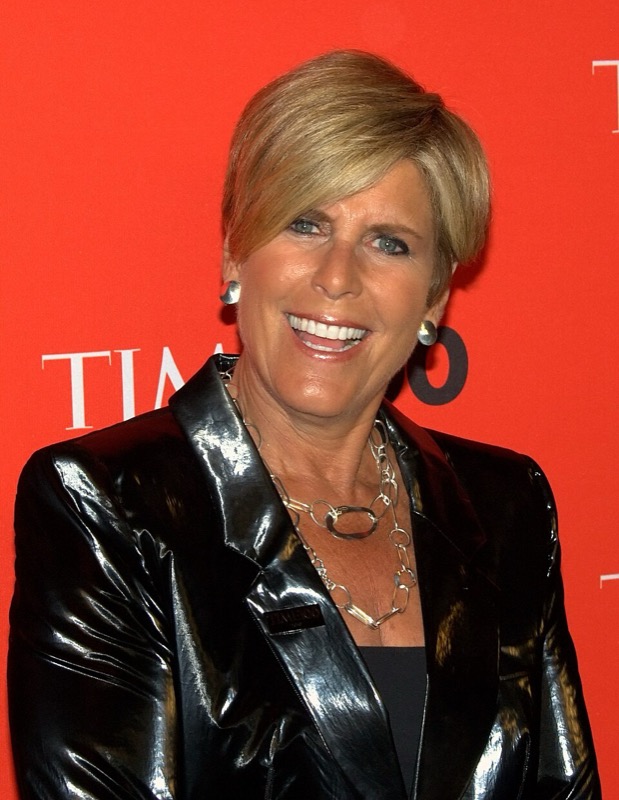
- Company
- Suze Orman Financial Group
- Role
- Founder & CEO
- Est. Net Worth
- $75 Million (Est.)
- Stage
- Established
- Industry
- Finance
Suze Orman
Founder & CEO at Suze Orman Financial Group
About
Suze Orman became America's most recognized personal finance advisor through her CNBC show, bestselling books, and no-nonsense approach to money management that made financial planning accessible to millions of Americans who had never spoken to a financial advisor. Starting as a waitress who lost her life savings to a dishonest broker, she became a financial advisor at Merrill Lynch, then built a media empire spanning nine New York Times bestsellers, an Emmy-winning television show, and a personal finance app. Her philosophy — that financial security is the foundation of personal freedom — resonated particularly with women and middle-class Americans who felt excluded from traditional wealth management.
Current Company
Suze Orman Financial Group — Founder & CEO
From Waitress to America's Financial Advisor
Suze Orman's origin story is central to her brand and her credibility. Working as a waitress at a Berkeley bakery in the late 1970s, she accepted $50,000 from customers who wanted to help her open her own restaurant and gave the money to a Merrill Lynch broker who lost it all in speculative investments. The experience taught her two things: that ordinary people are vulnerable to financial predators, and that the financial industry is designed to serve itself, not its clients. She sued Merrill Lynch, won, and decided to become the kind of financial advisor she wished she'd had.
At Merrill Lynch and then at her own firm, Orman developed the blunt, sometimes confrontational communication style that would make her famous. She told people what they didn't want to hear — that they couldn't afford the house they wanted, that their retirement savings were inadequate, that their spending habits were destroying their future — with a directness that felt revolutionary in an industry built on telling wealthy clients what they wanted to hear. Her first book, 'You've Earned It, Don't Lose It,' became a bestseller, and she became a fixture on public television and eventually CNBC.
Democratizing Financial Literacy
Orman's most significant contribution to American financial culture was making personal finance accessible and emotionally resonant for audiences that the traditional wealth management industry ignored entirely — particularly women, middle-class families, and people who felt too intimidated or too poor to walk into a financial advisor's office. Her CNBC show, which ran for 13 years, reached millions of viewers with segments like 'Can I Afford It?' where callers described purchases and Orman told them whether they could actually pay for them.
Critics from the financial planning establishment dismissed Orman's advice as oversimplified, and some of her specific recommendations — her insistence on Roth IRAs over traditional IRAs for nearly everyone, her skepticism of whole life insurance — generated legitimate debate among professionals. But these critiques missed the point of what Orman accomplished: she didn't replace professional financial planning, she created the entry point for it. Millions of Americans who had never thought about emergency funds, retirement accounts, or insurance planning started doing so because Orman made the conversation feel like something that belonged to them, not just to the wealthy.