- Company
- China Academy of Chinese Medical Sciences
- Role
- Nobel Laureate & Chief Scientist
- Est. Net Worth
- $5 Million (Est.)
- Stage
- Emerging
- Industry
- Healthcare
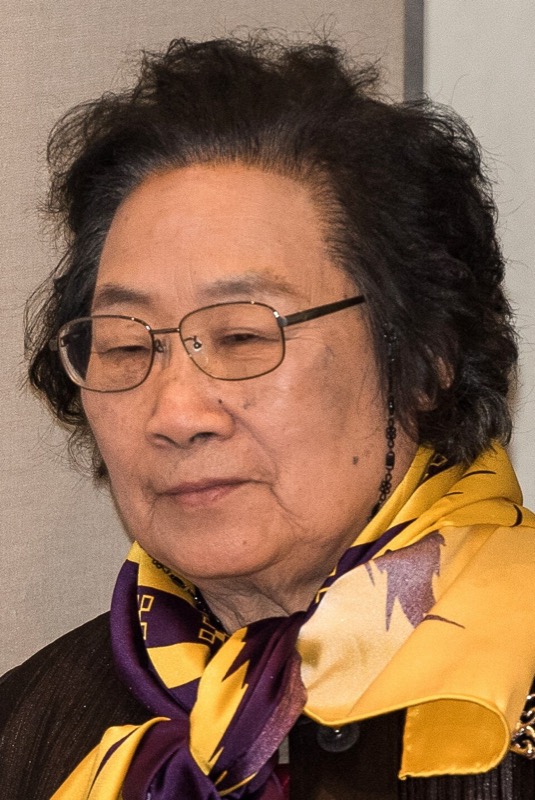
Tu Youyou
Nobel Laureate & Chief Scientist at China Academy of Chinese Medical Sciences
About
Tu Youyou discovered artemisinin, the antimalarial compound that has saved millions of lives across the developing world, earning her the 2015 Nobel Prize in Physiology or Medicine — making her the first Chinese woman and the first Chinese citizen without a doctoral degree or overseas training to win a Nobel in a scientific discipline. Her discovery came during Project 523, a secret Chinese government program launched during the Vietnam War to find new malaria treatments for soldiers fighting in tropical jungles. Tu turned to traditional Chinese medicine texts, finding a reference in a 1,600-year-old text by the alchemist Ge Hong that described using sweet wormwood to treat fever. She developed a low-temperature extraction method that preserved the compound's antimalarial activity — a breakthrough that has since been developed into artemisinin-based combination therapies that are now the World Health Organization's standard treatment for malaria worldwide.
Current Company
China Academy of Chinese Medical Sciences — Nobel Laureate & Chief Scientist
Ancient Texts and Modern Medicine: The Discovery of Artemisinin
Tu Youyou's discovery of artemisinin — the antimalarial compound that has saved millions of lives and earned her the 2015 Nobel Prize in Physiology or Medicine — represents one of the most remarkable examples of ancient knowledge informing modern drug discovery. In 1969, at the height of the Vietnam War, the Chinese government launched Project 523, a secret military research program aimed at finding new treatments for malaria, which was devastating North Vietnamese soldiers fighting in tropical jungles. Tu, then a researcher at the China Academy of Traditional Chinese Medicine, was tasked with screening traditional herbal remedies for antimalarial activity — a project that involved reviewing thousands of entries in classical Chinese medical texts dating back centuries.
The breakthrough came from an unlikely source: a 1,600-year-old text by the alchemist Ge Hong called 'Emergency Prescriptions Kept Up One's Sleeve,' which described soaking sweet wormwood (Artemisia annua) in water and wringing out the juice to treat intermittent fevers. What caught Tu's attention was the instruction to use cold water rather than the standard boiling-water extraction that her team had been employing — a detail that suggested heat was destroying the active compound. When Tu switched to a low-temperature ether-based extraction method, she isolated a substance that eliminated malaria parasites with 100 percent effectiveness in animal studies. In a decision that reflected both the urgency of the military program and the different ethical norms of the era, Tu tested the compound on herself before administering it to malaria patients — all of whom recovered.
A Nobel Without a PhD: Persistence Against Institutional Odds
Tu Youyou's Nobel Prize was historic for multiple reasons: she was the first Chinese citizen to win a Nobel Prize in Physiology or Medicine, the first Chinese woman to win any Nobel Prize, and — most unusually — she accomplished this without a doctoral degree, without foreign training, and without membership in any of China's national academies of science. In the hierarchical world of Chinese scientific institutions, where credentials and academic rank carry enormous weight, Tu's lack of formal advanced qualifications had long limited her recognition and advancement. Her Nobel vindicated a career spent largely outside the spotlight of China's scientific establishment, and it forced a conversation about whether the academy system's emphasis on credentials over contributions had caused it to overlook one of the most important scientific discoveries in Chinese history.
The global impact of Tu's discovery is measured not in prizes but in lives. Artemisinin-based combination therapies (ACTs) are now the World Health Organization's recommended first-line treatment for malaria worldwide, and their deployment has contributed to a dramatic decline in malaria mortality — from over 800,000 deaths per year in 2000 to fewer than 600,000 by the 2020s. In sub-Saharan Africa, where the burden of malaria is greatest, ACTs have prevented hundreds of millions of clinical cases and saved millions of lives, many of them children under five. Tu's work demonstrated that the vast pharmacopoeia of traditional medicine — Chinese, Indian, African, and others — remains a largely untapped resource for modern drug discovery, and that the divide between 'traditional' and 'modern' medicine is far more permeable than either side has typically acknowledged.